New text element
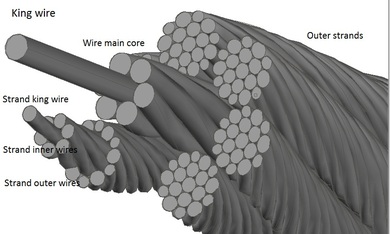
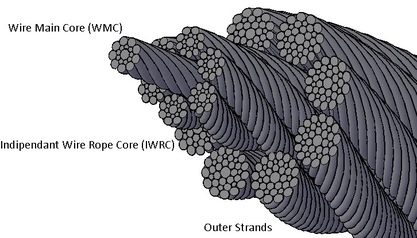
Steel Wire Rope - a rope consisting of mostly steel wire
Strand - wires twisted together in a geometrical fashion
Independent wire rope core- the centre of a steel wire rope consisting of a steel wire rope.
Wire main core - the centre of a steel wire rope consisting of a steel wire strand
Fibre core - the centre of a steel wire rope manufactures from a synthetic of natural fibre
King wire - the central wire of a strand
Outer wire - the wires on the outside of a strand
Inner wire - a wire between the king wire and the outer wires often referred to as d1, d2 etc
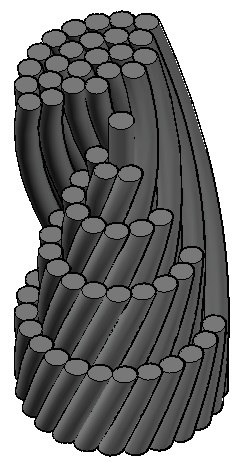
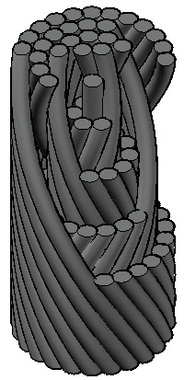
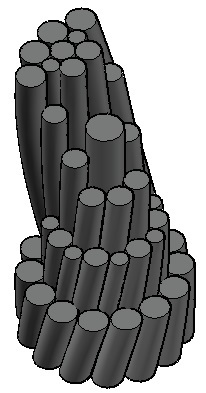
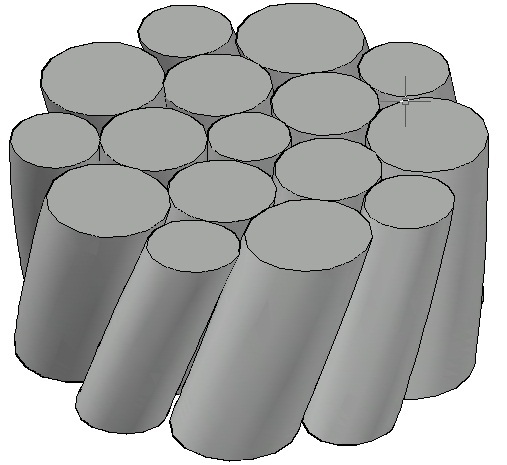
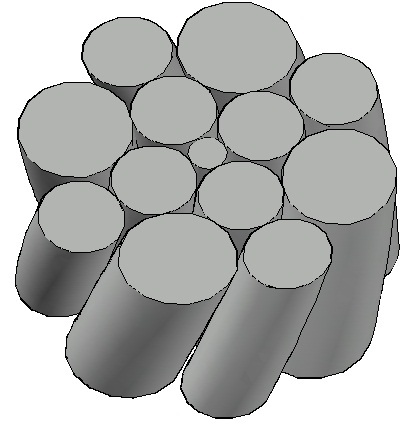
Ropes are manufactured by closing the strands together, this can be done to achieve a particular characteristic required by the application:
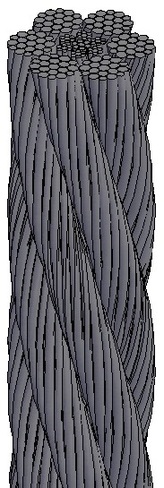
Left Hand Ordinary
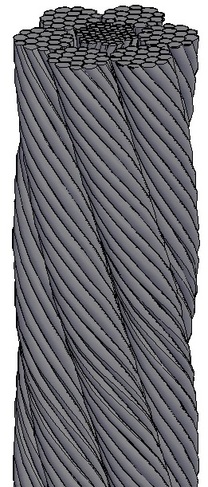
Left hand Langs
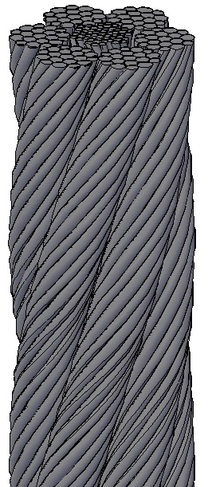
Right Hand Langs
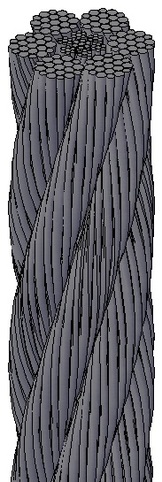
Right Hand Ordinary
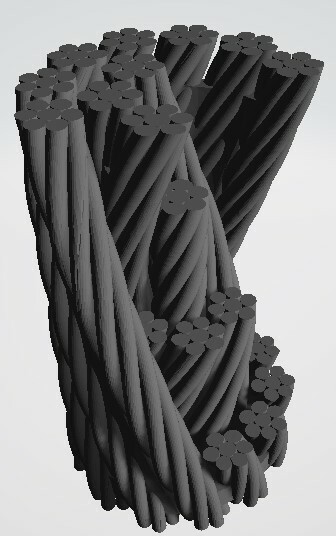
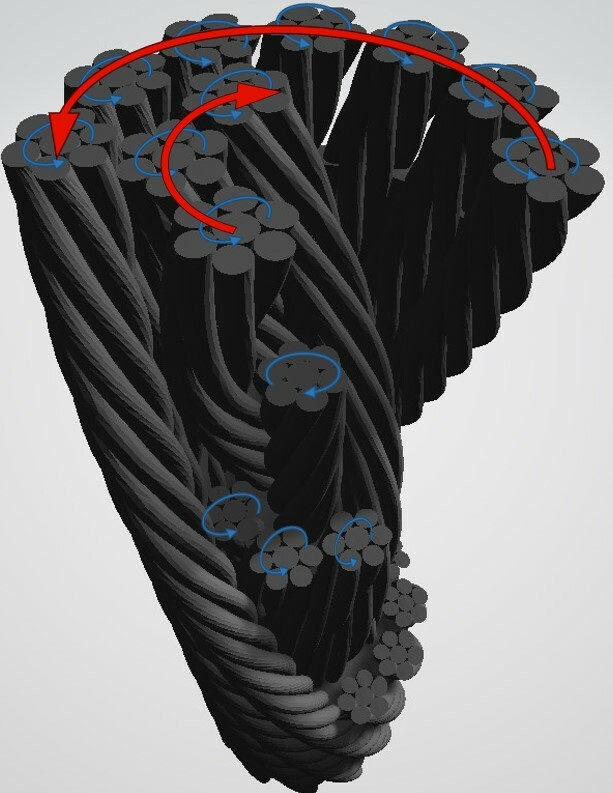
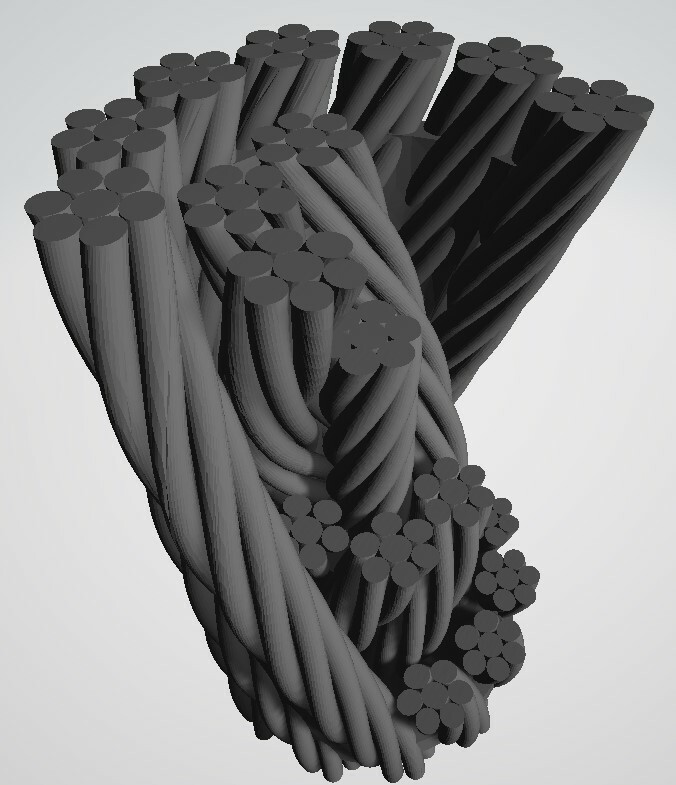
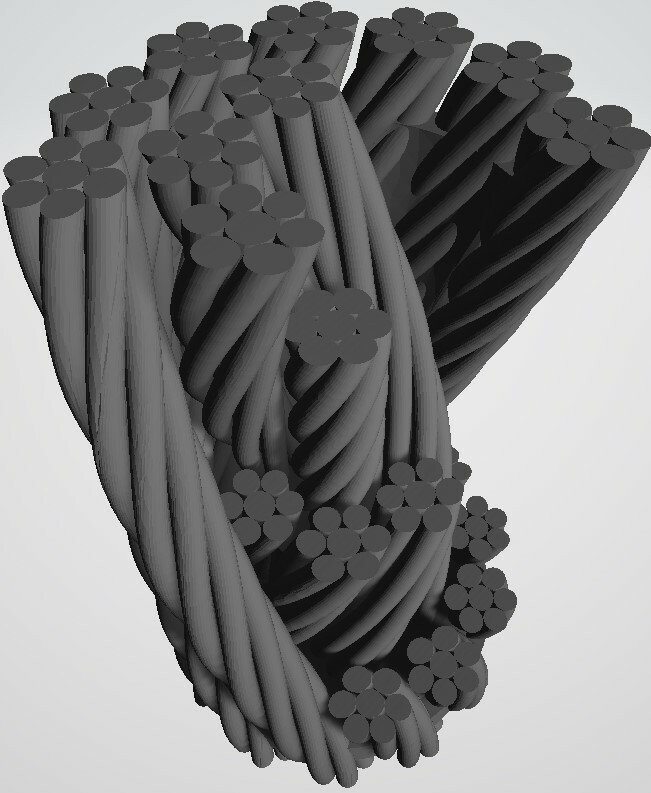
This terminology is old and refers to a semi rotation resistant rope construction consisting of 12 outer strands over a 6 strand IWRC. The IWRC is sometimes made with a fibre core differentiating the 18 and 19 strand non-spin. the rotation resistance of the rope is affected by the lay configuration of the strands.
The best breaking force is achieved by manufacturing the rope with langs layed outer strands over a ordinary layed IWRC. However, the rotation resistance is very low.
The best rotation resistance is achieved by manufacturing the rope with an ordinary outer layer over a langs layed IWRC. In this configuration the inter layer wire nicking is severs resulting in a reduced breaking force, The ropes fatigue life is also drasticaly reduced.